

Panacea Vita at FIT & WELL 2026: The Weekend We Stopped Symptom-Chasing and Started Connecting the Dots
FIT & WELL 2026 in Celje wasn’t just a wellness expo — it felt like a mirror. Across three days, we heard the same sentences again and again:
“My tests are normal, but I don’t feel normal.”
“I’m exhausted no matter what I do.”
“My digestion, mood, and sleep all feel connected.”
“I’m doing everything right… why do I still feel off?”
That’s exactly why Panacea Vita showed up — not to sell quick fixes, but to offer something most people are missing: clarity.
Because when you understand how the body works as a system, your symptoms stop feeling random. They become signals — and signals can be translated.
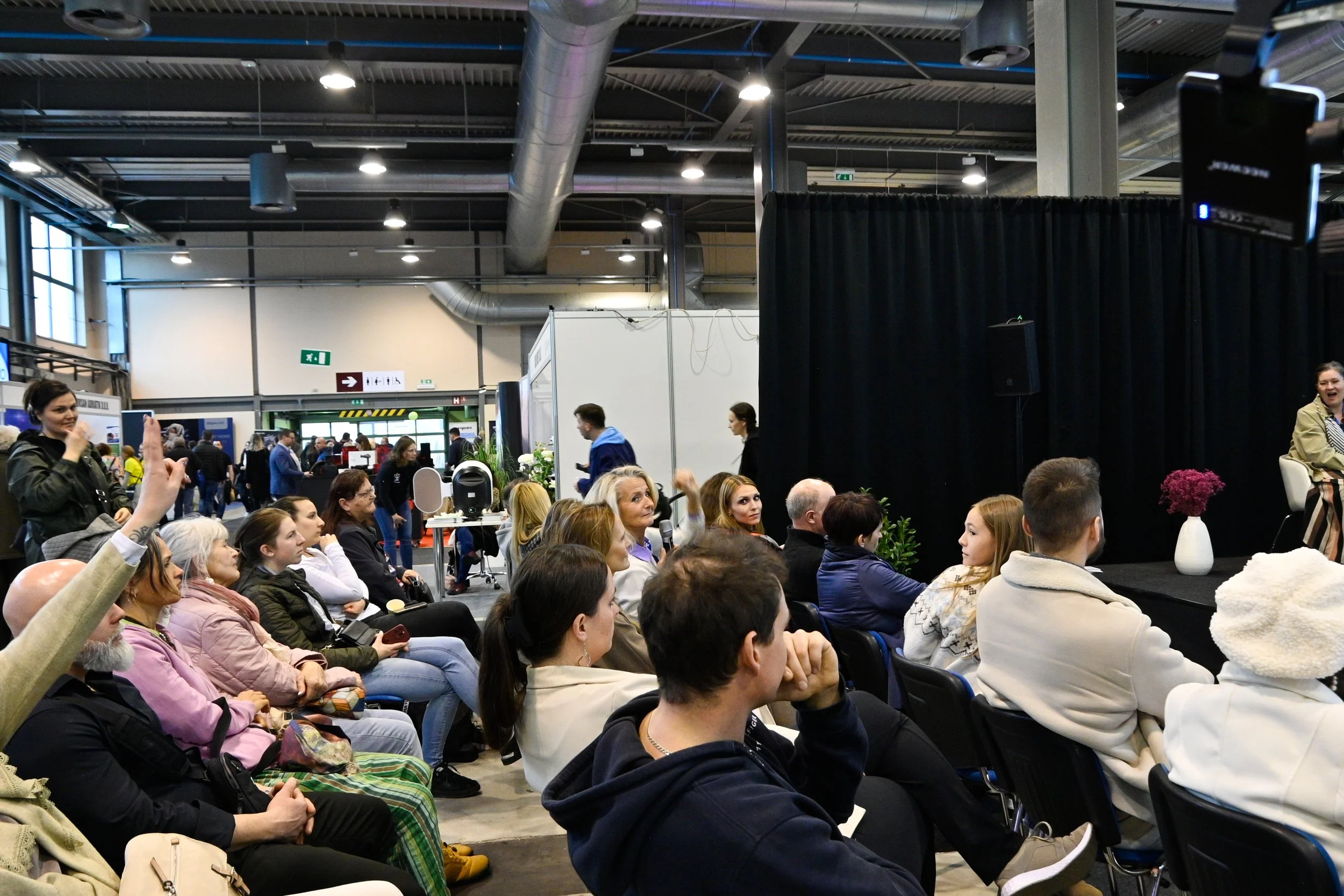
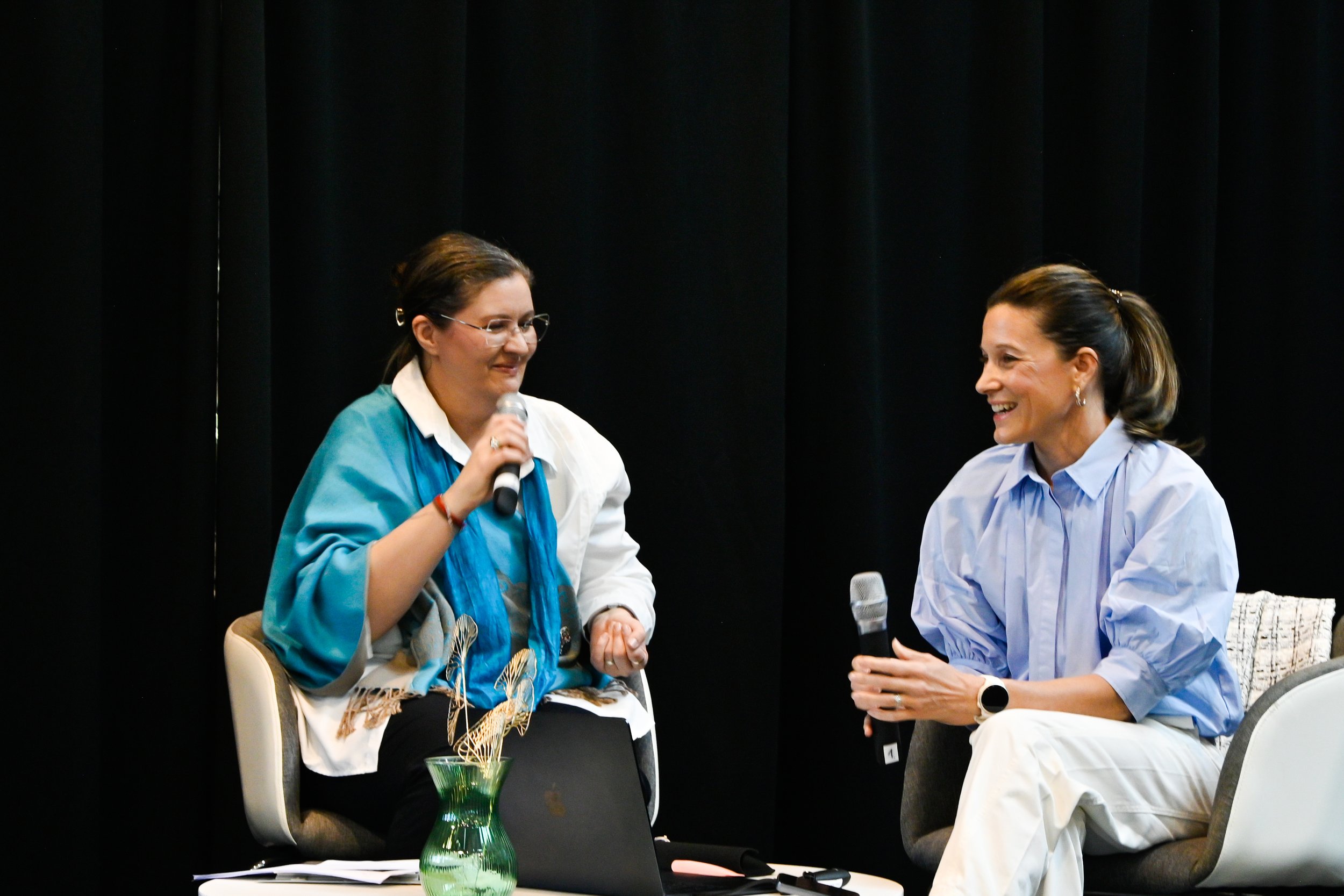
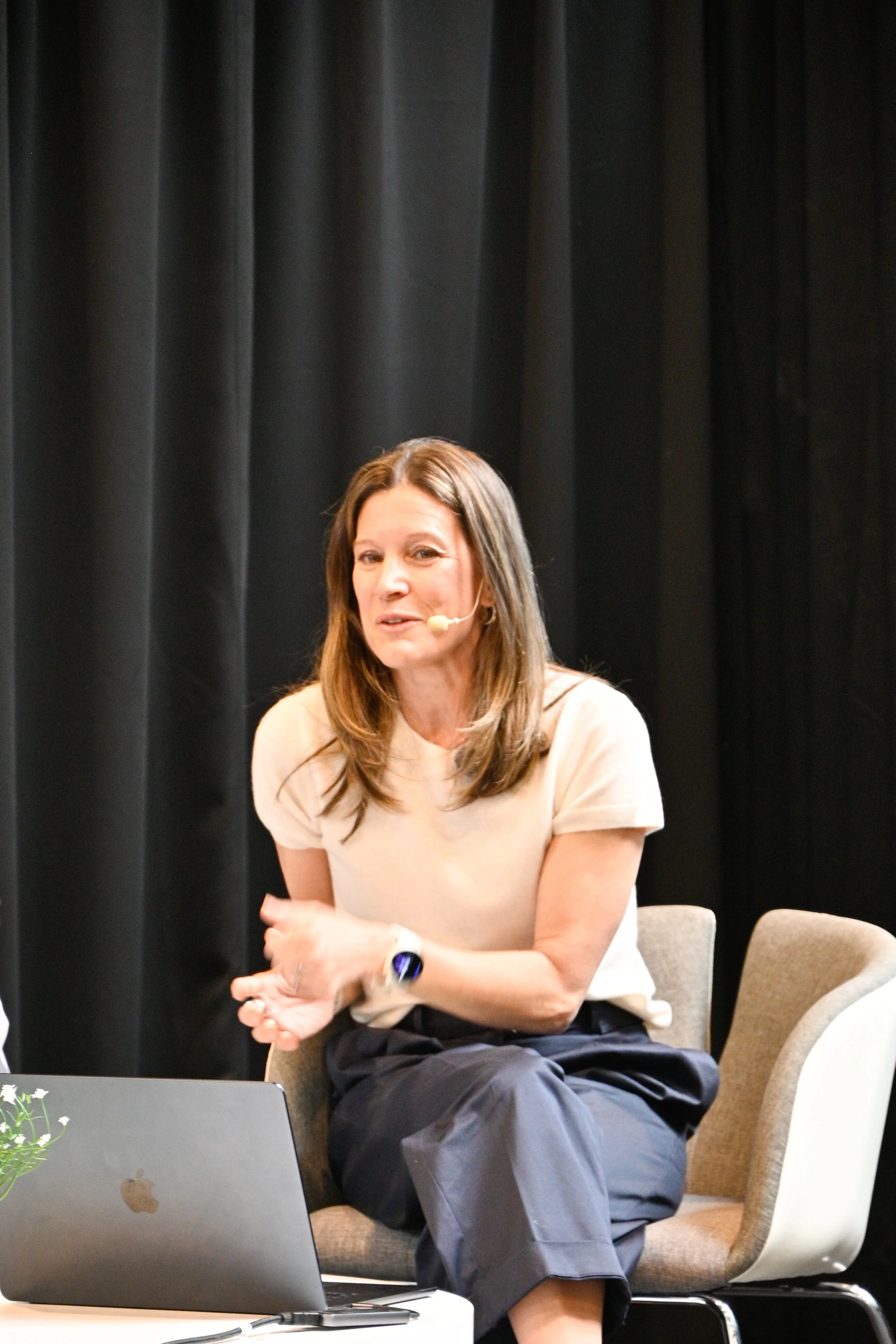
Over the weekend, Dr. Špela Perc delivered three talks on Stage L that were designed to do one thing: help people connect the dots behind stress, fatigue, and gut health — without overwhelm.
Here are the key themes we explored — and what we want you to take with you, even if you couldn’t attend.


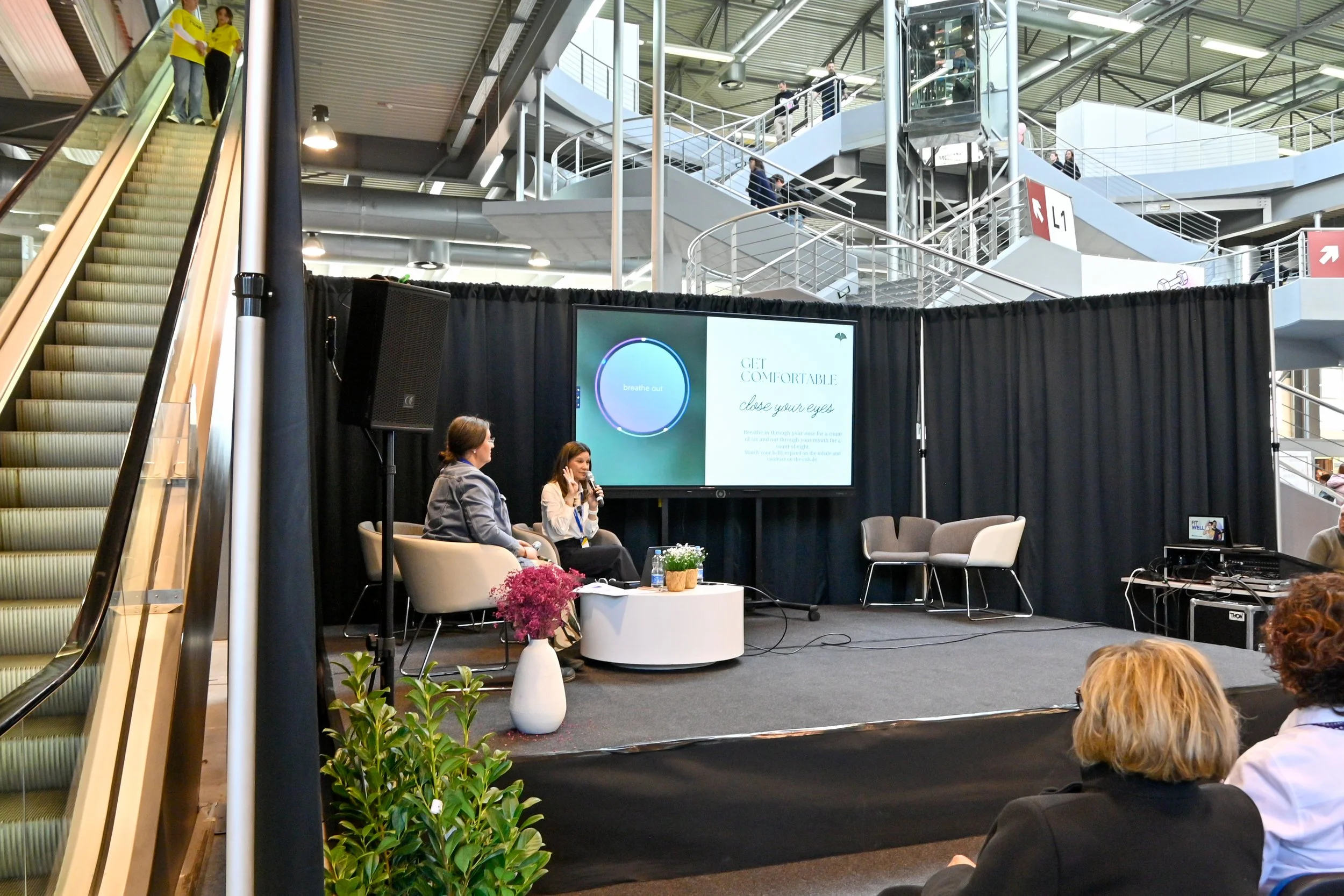

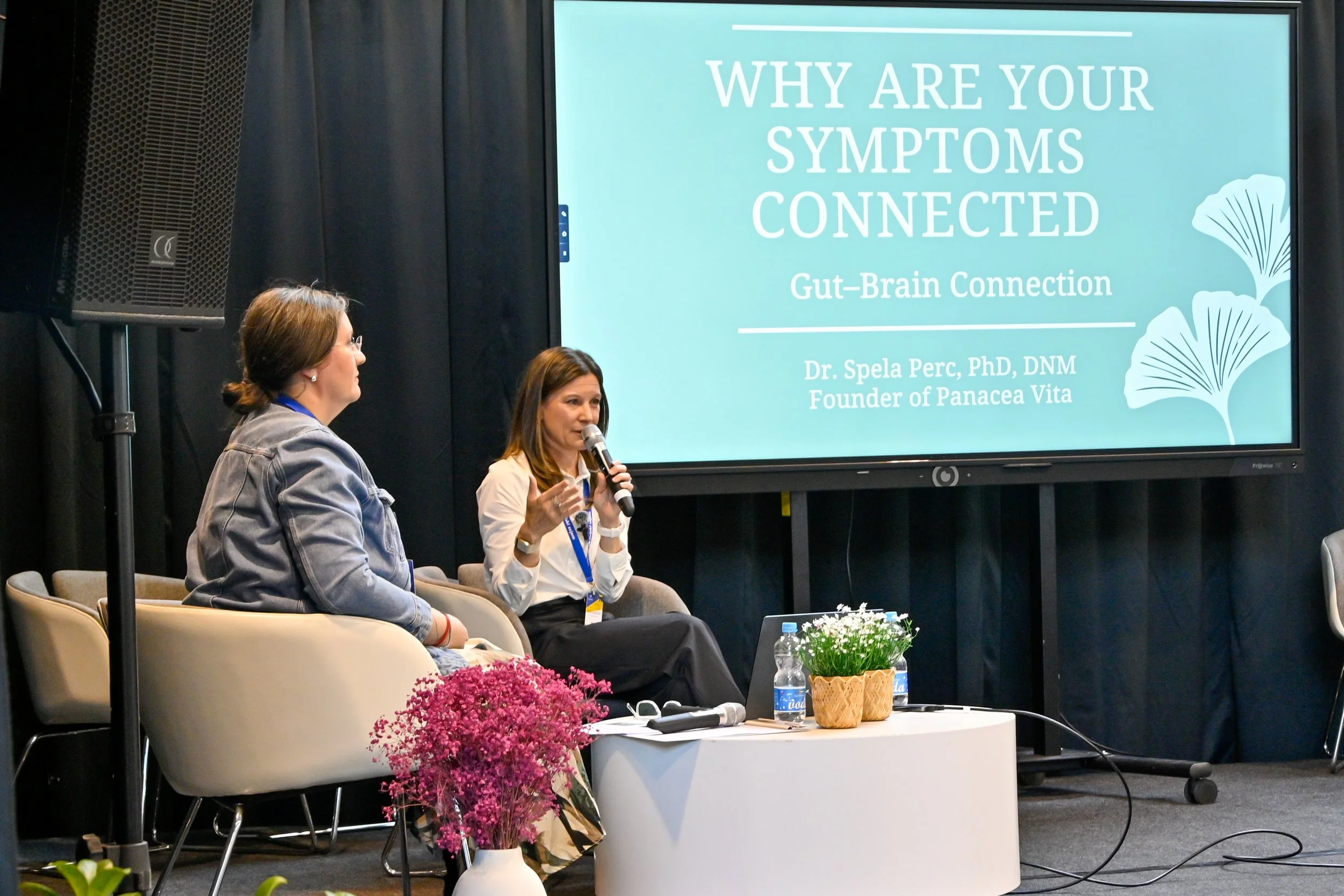
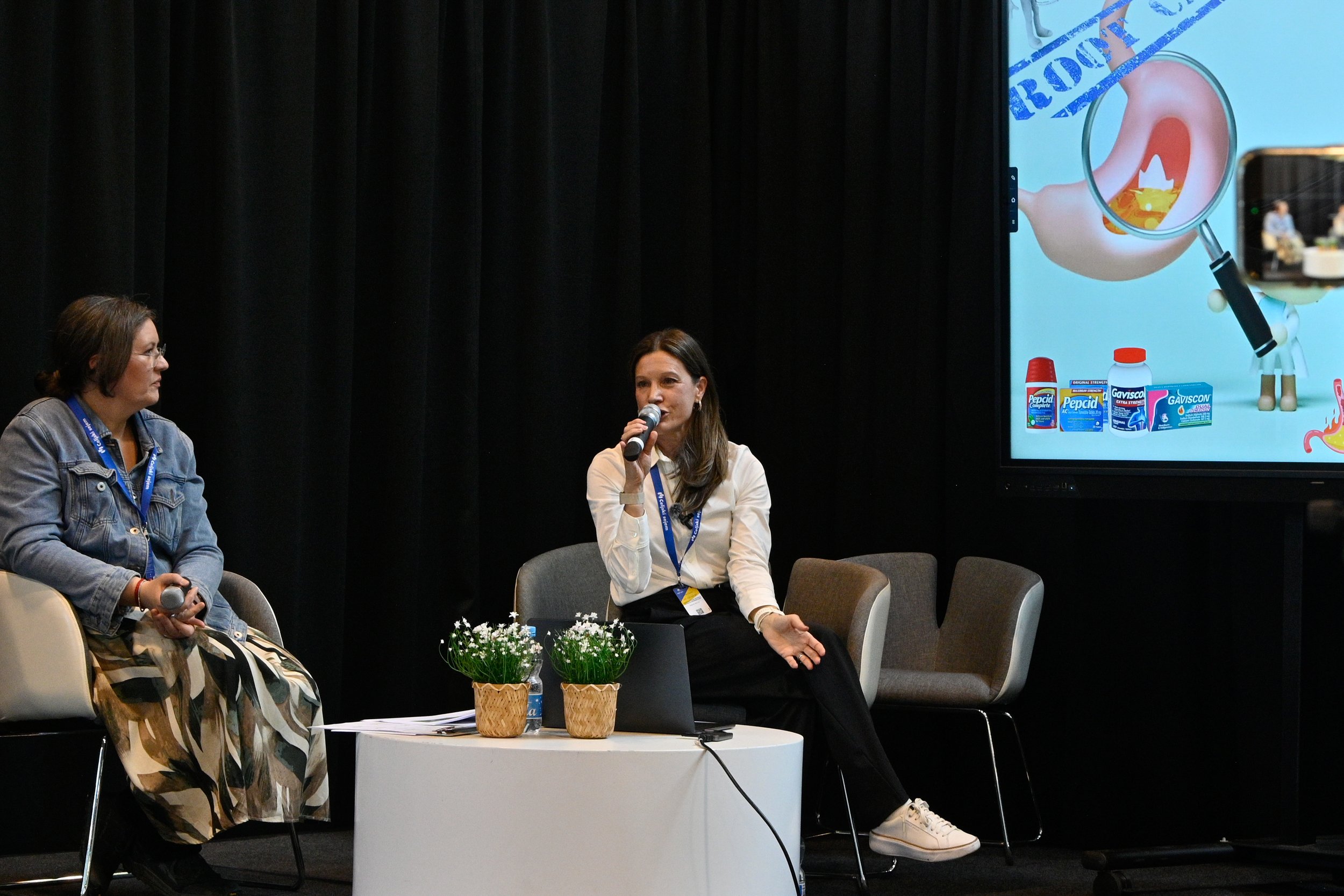
1) The Gut–Brain Connection: Why Your Symptoms Are Connected
We opened the weekend with one of the most validating truths in integrative wellness:
Your symptoms aren’t isolated — they’re connected.
For many people, gut issues aren’t just gut issues.
Bloating shows up with anxiety.
Constipation pairs with brain fog.
Food sensitivities rise with sleep disruption.
Fatigue gets worse when digestion is off.
Why? Because your gut and brain are in constant communication through what’s often called the gut–brain axis — a network involving the nervous system, immune system, hormones, and the microbiome.
When your digestion is under strain, the body doesn’t just struggle to break down food. It can also struggle to regulate mood, focus, and resilience.
One of the most important takeaways from this talk was simple:
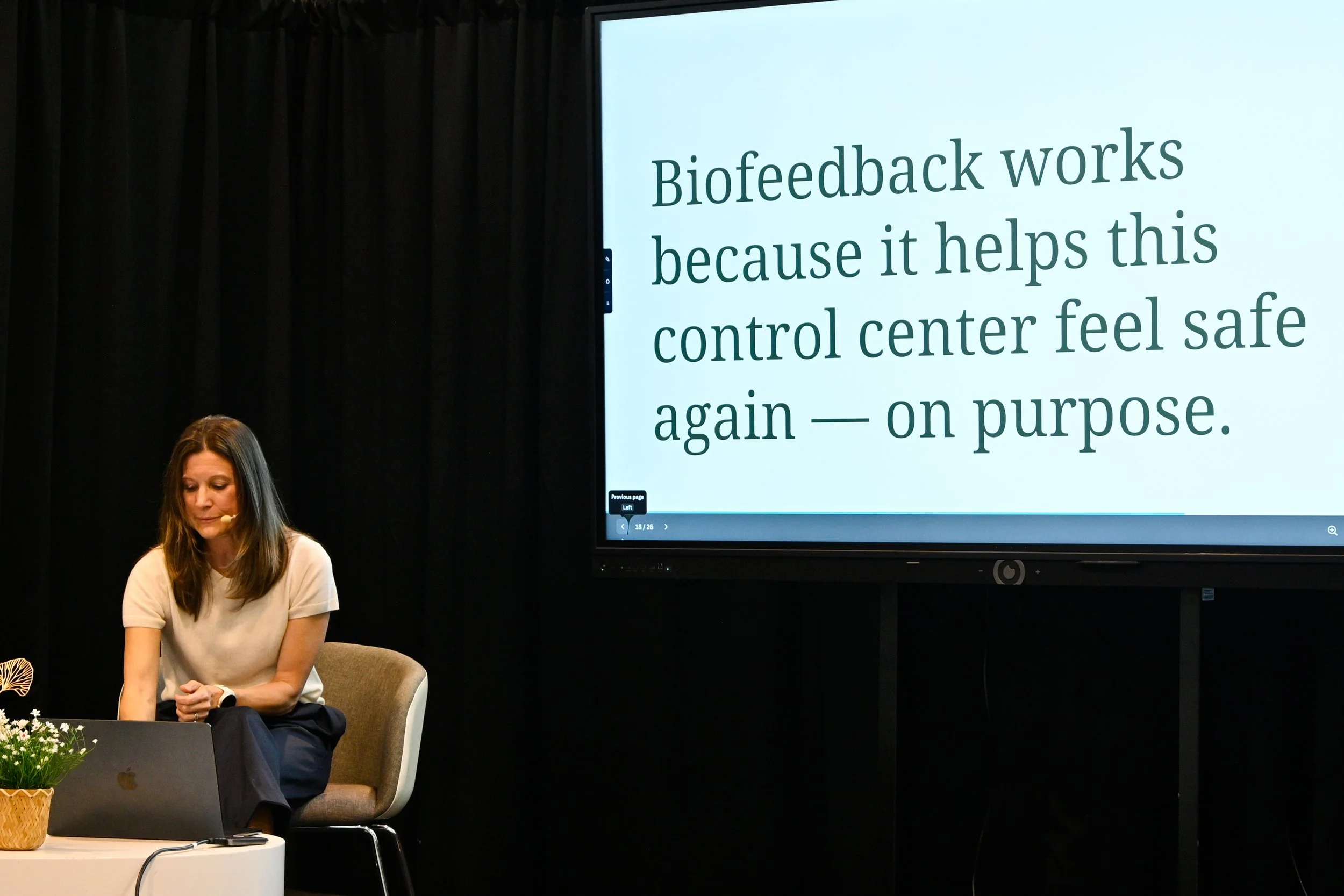
Healing doesn’t happen in a body that doesn’t feel safe.
When stress is high, digestion is one of the first things the body downshifts — not because you’re failing, but because the body is prioritizing survival. Supporting the gut often starts by supporting regulation.
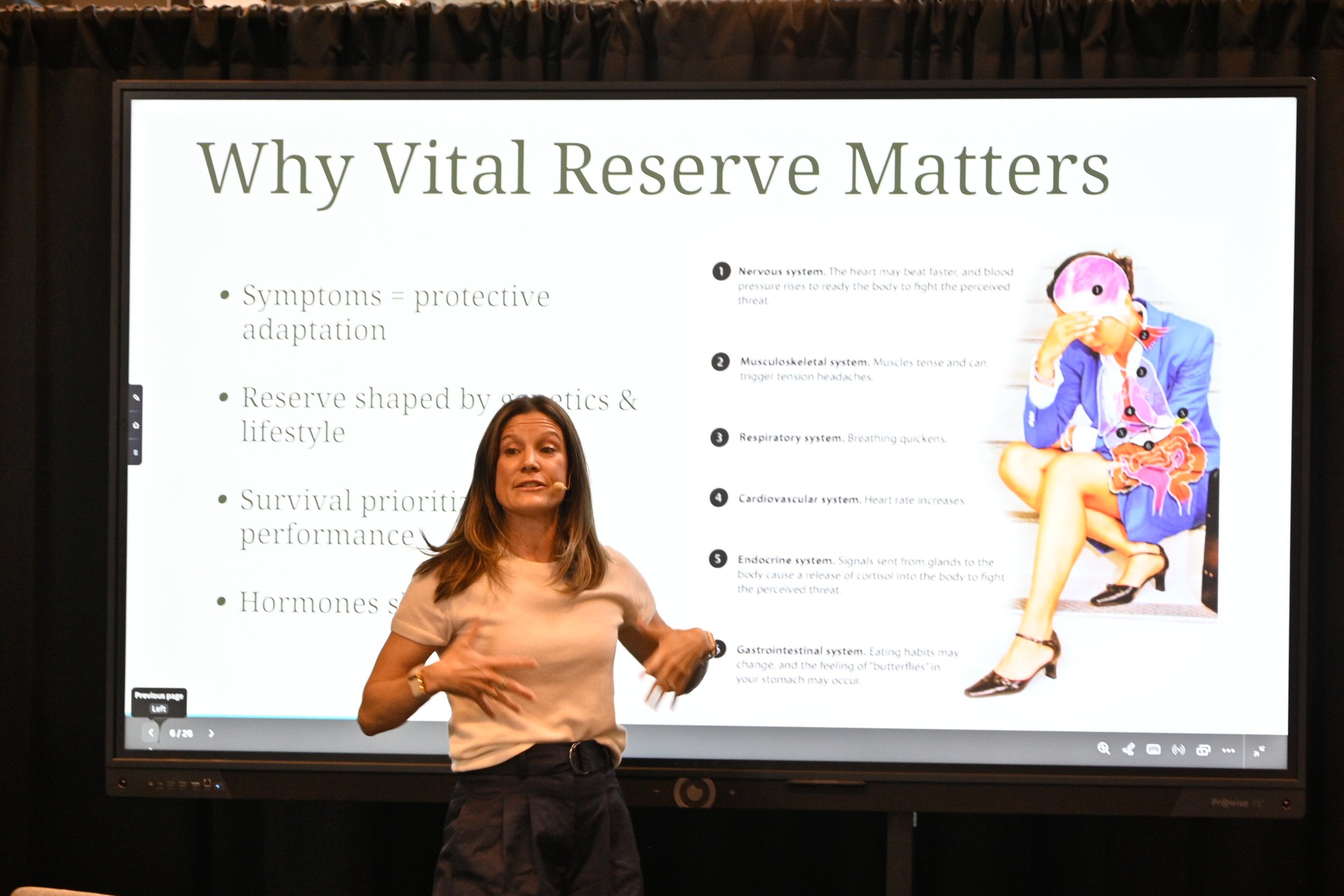
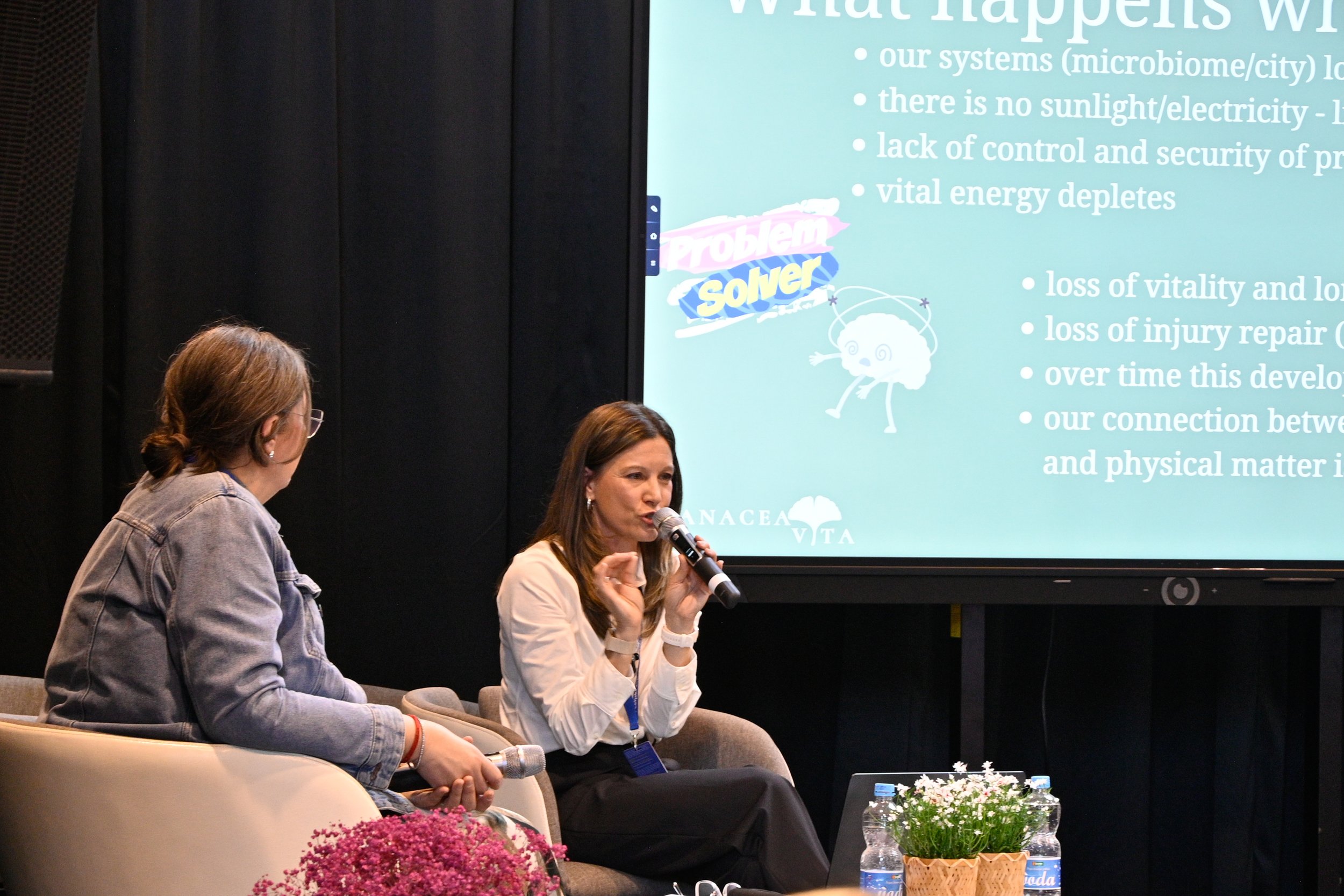
2) Stress Isn’t the Enemy: The Problem Begins When the Body Loses Balance
On day two, we reframed stress in a way that surprised many attendees:
Stress is not the enemy. Chronic imbalance is.
Stress is a normal, intelligent response. It helps you adapt. It helps you perform. It helps you survive.
But the body was never designed to stay in a constant state of activation.
The real tipping point happens when the body can’t return to balance — when you’re always “on,” even in rest.
This can look like:
waking up tired even after sleep
feeling wired at night but drained during the day
constant tension in the body
cravings, mood swings, or irritability
gut symptoms that flare with stress
recurring inflammation or slow recovery
A big moment for many people in the room was this realization:
Your symptoms may not be a sign that something is wrong with you — they may be proof your body is trying to protect you.
Instead of pushing harder, the invitation is to rebuild your capacity: the body’s ability to adapt and return to a regulated state.
3) Why You’re Exhausted (And It’s Not Just in Your Head)
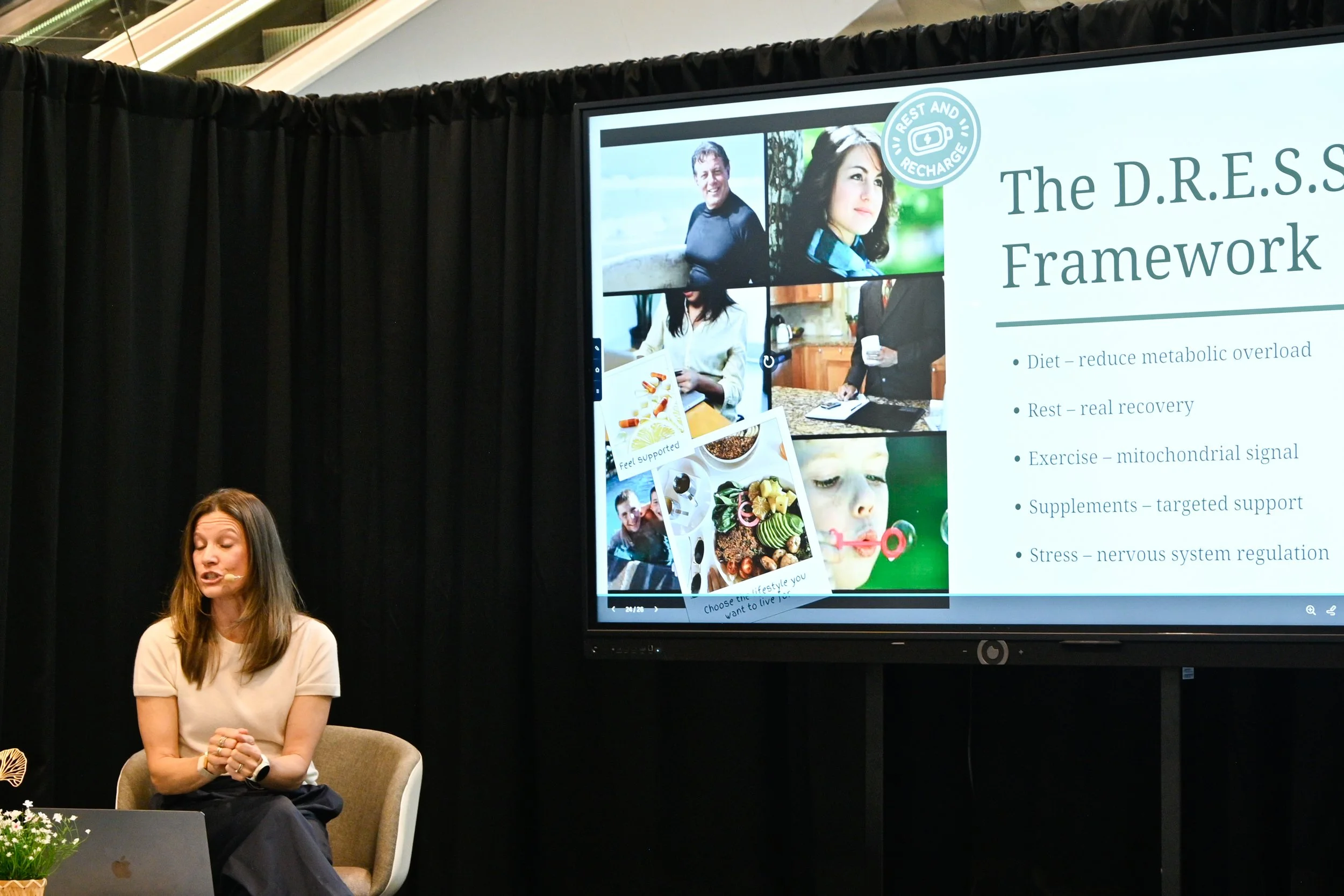
On the final day, we talked about the most common thread we saw throughout the weekend: fatigue.
Not “I had a busy week” fatigue — but the kind that lingers even when you’re doing your best.
This talk was for anyone who has felt dismissed, minimized, or told they just need to:
sleep more
take a supplement
reduce stress
“try harder”
Here’s what we emphasized:
Energy is not just about willpower. It’s biology.
When the body is out of balance, energy production can be impacted by multiple overlapping drivers — including stress load, digestion, blood sugar regulation, inflammation, and nervous system dysregulation.
That’s why you can be doing “healthy things” and still feel depleted: because the body may be compensating behind the scenes.
The goal of this talk wasn’t to diagnose. It was to restore trust:
You are not imagining it. Your body is communicating.

The Most Important Theme From FIT & WELL
If we had to summarize the weekend in one sentence, it would be this:
Symptoms don’t need to be silenced first. They need to be understood.
When you learn how your body’s systems interact — gut, nervous system, metabolism, stress response — you stop feeling like you’re “broken,” and start seeing a path forward.
That’s the work we do at Panacea Vita.
Not quick fixes. Not symptom-chasing.
But whole-body support that helps you rebuild regulation, resilience, and energy — from the inside out.
Couldn’t Attend? Here’s How to Take the Next Step
If you resonated with any of these themes — gut–brain connection, stress imbalance, or persistent exhaustion — here are three supportive next steps you can take now:
Start tracking patterns, not just symptoms.
When do symptoms flare?After stress?
After certain foods?
During certain parts of the day?
Support regulation before you force optimization.
The body improves faster when it feels safe.Your nervous system sets the pace.
Choose a systems-based approach.
When multiple symptoms are present, the answer is rarely one supplement or one strategy.The body responds best to an integrated plan.
Want Support From Panacea Vita? Book a clarity call, and we’ll help you map the best next step based on your symptoms, goals, and current capacity.
Book a 30-Min Clarity Call
Not sure where to start? In this short call, we’ll map your top symptoms, identify the most likely patterns behind them (stress regulation, gut–brain connection, metabolism, recovery), and recommend the most supportive next step—without overwhelm.