

The Labs I Run on Every Patient as a FDN Practitioner
If you have ever sat across from a doctor, been told your results look "normal," and walked out still exhausted, still frustrated with your body, still searching for an answer — this is for you.
Standard lab panels were designed to catch disease. They were not designed to catch what happens in the years before disease. They were not designed to capture the hormonal, metabolic, cardiovascular, and nervous system shifts that many women move through in their thirties, forties, and fifties — often silently, often alone, and often while being told that what they are feeling is stress, aging, or simply something to accept.
At Panacea Vita, I work with people who are already doing a great deal right. They eat carefully, exercise consistently, and try to rest. And still something feels off. Still the energy is not there. Still the body is not responding the way it used to. Still the brain fog lingers.
This is not a failure of effort. It is a signal. And the body always has a reason.

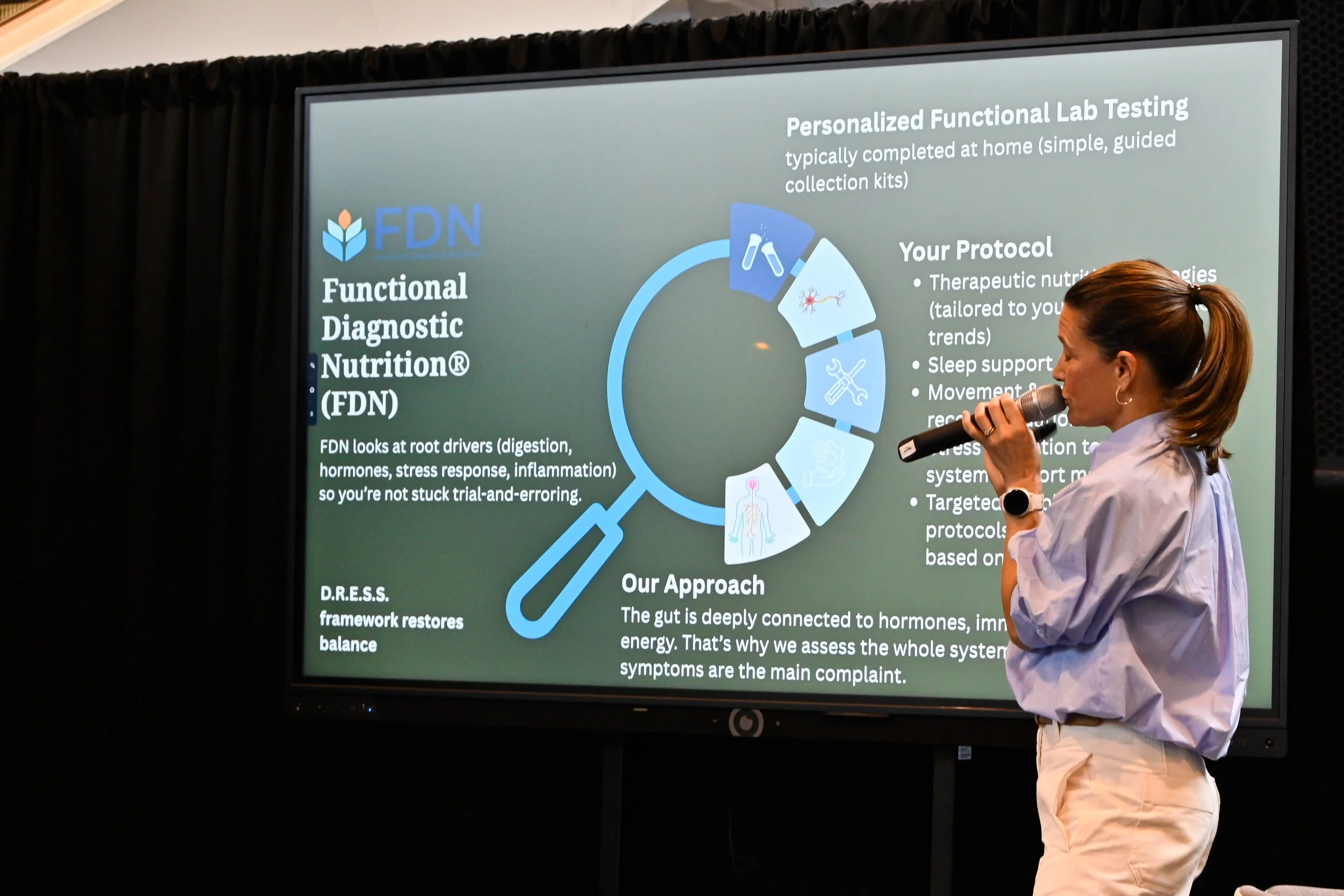
The Space Between "Not Sick" and "Truly Well"
Most people who come to Panacea Vita have already done the basics. They have had bloodwork. They have been told their results look fine. And they have walked out of that appointment still feeling exactly the way they walked in.
This is not because their doctor was wrong. Standard diagnostic testing is designed to identify disease — to catch what has already progressed to a diagnosable condition. It does this well. What it does not do is illuminate the space between not clinically sick and genuinely thriving.
That in-between space is where most people actually live. It is where fatigue, inflammation, hormonal imbalance, poor recovery, digestive dysfunction, and nervous system dysregulation quietly build — often for years — before they become something a standard panel can name.
Functional lab testing is designed specifically for this space. It does not look for disease. It looks at how well your systems are actually functioning — and identifies where and how that function has been lost, often long before conventional thresholds are crossed.
The Five Areas I Investigate
At Panacea Vita, functional testing sits at the center of my integrative health work. The five areas I assess most often are the ones that, in my experience, carry the most hidden burden — the ones most likely to be quietly driving the symptoms that have gone unexplained.
1. Stress and Hormones
This is often where we start, and for good reason. The stress response is one of the most powerful regulatory systems in the body — and one of the most commonly overlooked in conventional workups.
Through salivary or dried urine testing, we can map cortisol across the full day: not just a single number, but the arc of the stress hormone from morning through evening. This reveals whether someone is waking already depleted, spiking at night when they should be winding down, or running a pattern of chronic cortisol elevation that is quietly disrupting sleep, metabolism, immune function, and recovery.
DHEA — the body's primary rebuilding hormone — is assessed alongside cortisol. The ratio between the two tells us whether the body is in a state of chronic breakdown or still has the capacity to repair. Sex hormones are included as well: estradiol, progesterone, and testosterone, each of which plays a role in energy, mood, motivation, bone health, and body composition that is rarely captured in a standard panel.
Secretory IgA, a marker of mucosal immune function, rounds out this panel — offering a window into immune surveillance at the gut level, which is where much of the immune system lives.
2. Metabolic Function and Detoxification
This test examines how efficiently the body is processing protein, clearing toxins through the liver, and managing oxidative stress.
Elevated oxidative stress is one of the most common findings I see — and one of the most frequently overlooked contributors to fatigue, inflammation, poor recovery, and cellular aging. The liver's ability to process and excrete toxins is equally important: when detoxification pathways are sluggish, toxins accumulate and create a systemic inflammatory burden that touches every other system.
3. Intestinal Integrity
Intestinal permeability — commonly called leaky gut — is extraordinarily common and extraordinarily underdiagnosed.
Testing in this area measures zonulin, which signals whether the tight junctions in the gut lining are open when they should not be; histamine, which reveals immune stress in the gut; and DAO, the enzyme responsible for breaking histamine down. When DAO is low and histamine is high, chronic gut and immune inflammation can persist regardless of how clean the diet appears.
This is one of the areas where the FDN approach — testing rather than assuming — makes the biggest difference. Leaky gut produces symptoms that look like almost everything else. Without testing, it is nearly impossible to identify with confidence.
4. Gut Microbiome and Pathogens
The GI-MAP stool analysis goes deeper into the gut environment — looking for pathogens, parasites, opportunistic bacteria, and imbalances in the beneficial microbiome. H. pylori, protozoa, and yeast overgrowth are among the most common findings, and all of them can act as significant stressors on the body even when they produce no obvious digestive symptoms.
The gut microbiome shapes far more than digestion. It influences immune regulation, neurotransmitter production, mood, cognition, and inflammation. Understanding what is actually living in the gut is foundational to understanding why the body is responding the way it is.
5. Food Sensitivities
Food sensitivities are frequently a consequence of intestinal permeability — the gut lining, compromised, allows particles through that trigger an immune response. But they can also amplify and sustain the very inflammation that caused the leaky gut in the first place.
Rather than guessing which foods may be driving reactivity, testing allows us to see how the immune system actually responds — in real time, at the cellular level — to a broad range of foods. This creates a data-informed starting point for dietary adjustments, rather than cycles of elimination and reintroduction that can take months and still leave questions unanswered.
From Data to Protocol — the D.R.E.S.S. Framework
Functional lab results are only as valuable as what you do with them.
At Panacea Vita, I translate test findings into a personalized protocol structured around five foundational areas — what I call the D.R.E.S.S. framework:
Diet — macronutrient ratios, food quality, and specific foods adjusted to support what the labs reveal about digestion, immune reactivity, and metabolic function.
Rest — sleep quality, circadian rhythm alignment, and nervous system recovery, particularly for clients showing cortisol dysregulation or high oxidative stress.
Exercise — movement that is calibrated to hormonal and metabolic status, not generic prescription. This is where Classical Pilates plays a significant role at Panacea Vita: it supports nervous system regulation, builds strength without creating additional stress burden, and restores the body's internal communication.
Stress Reduction — identification of all stressors across the system — emotional, chemical, environmental, physiological — and targeted strategies for reducing total stress load.
Supplementation — targeted, not generic. Supplements fill specific gaps revealed by the data. They are not a substitute for the other four pillars, but they can meaningfully accelerate healing when the rest of the protocol is in place.
These five areas work together. Addressing only one or two while the others remain unexamined is why so many health approaches produce partial results. The body is a system. Supporting it requires a systems perspective.
Why This Changes Everything
Many people come to me having tried multiple approaches — various diets, supplements, practitioners, programs. Some have experienced some improvement. Most have not found the through-line that makes it all make sense.
Functional testing provides that through-line.
When we know what is actually happening in your hormonal system, your gut, your liver, your immune response, and your cellular environment, we stop guessing. We stop cycling through trial and error. We build a protocol that is designed for your body — not a version of you that matches a general pattern, but the actual you, with your actual physiology, at this actual moment.
This is the Panacea Vita approach. Not chasing symptoms. Not applying generic solutions. Testing first, then building a plan that the data supports.
The body is always communicating. Functional testing helps us learn to listen with precision.
Ready to stop guessing and start understanding what your body is telling you? A Clarity Call is where we begin.
Book yours at panaceavita.com